
Family-Style vs. Plated Dinner Service | Ocotillo


Family-Style and Plated Service Are Two Very Different Dining Experiences
We get this question a lot. People planning events in Grand Junction, rehearsal dinners, corporate lunches, birthday parties, golf league dinners, want to know what is the difference between family-style and plated dinner service before they commit to anything. The short version: one puts big shared platters on the table, the other delivers individual plates directly to each guest. But that one difference changes the whole feel of your event, and it's worth understanding before you book a space.
Family-style dinner service is exactly what it sounds like. Large bowls and platters come to the table. Guests pass dishes around, serve themselves, go back for more. It moves like a big Sunday meal at home, loose, warm, people talking across the table.
Plated service runs the other direction. Each guest gets their own plate, already portioned and arranged in the kitchen. Nothing gets passed. Nothing gets shared. The kitchen controls the presentation down to the last detail.
How the Feel of the Room Changes
Most people don't think about this part until they're already at the event. The service style you pick sets the tone for the whole room. Family-style creates movement and noise in a good way, people are reaching, laughing, asking someone to pass the potatoes. We've watched quiet groups of coworkers loosen up fast once shared plates hit the table. Something about passing food around breaks the ice in a way no icebreaker game ever does.
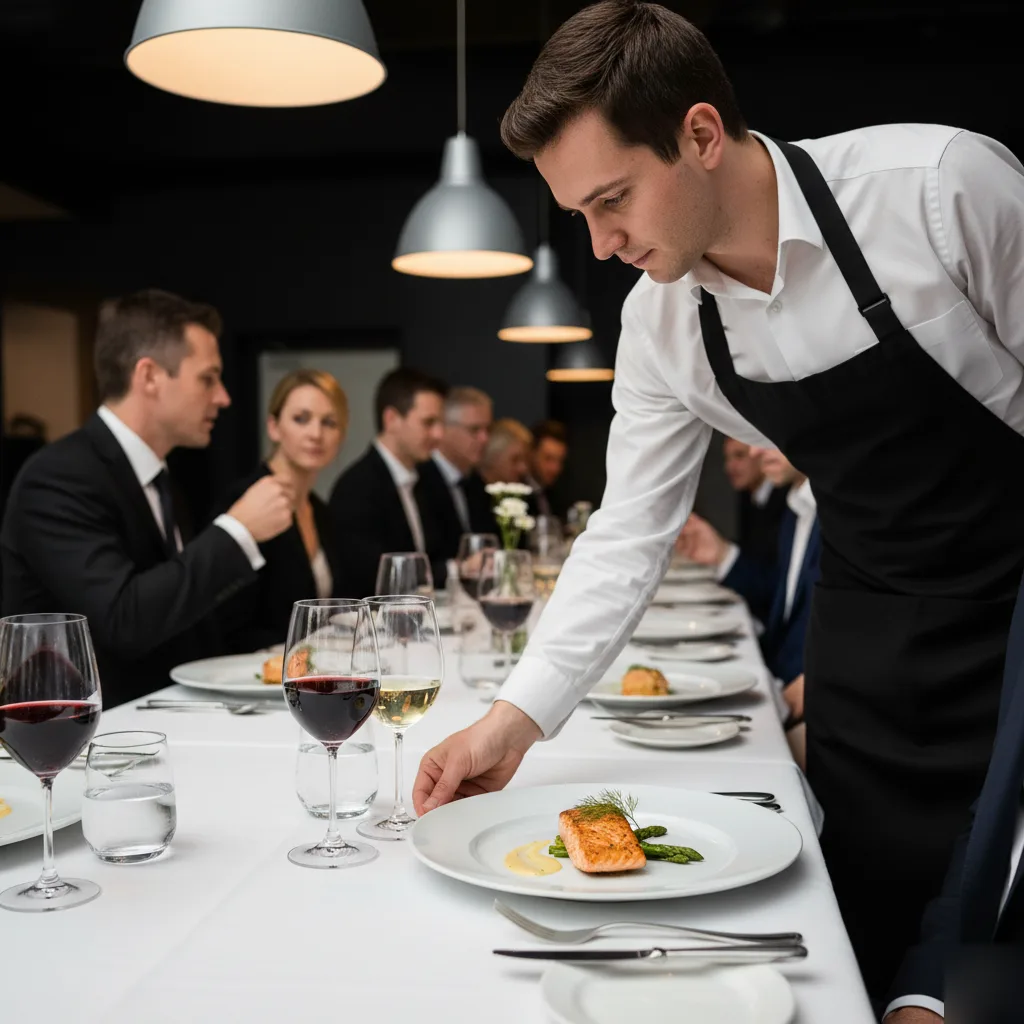
Plated service is a different kind of room. Calm. Structured. Every guest gets the same experience at the same moment. There's a rhythm to it that reads as polished and intentional. For a formal dinner in a private dining room, that structure earns its keep.
Neither style is better. They just do different jobs.
Practical Differences That Affect Your Event
Beyond the mood, there are real logistics at play. Here's what actually separates these two approaches in ways that affect your planning:
- Table space: Family-style needs room for platters, so your table fills up fast. Plated service keeps the surface open for centerpieces and place settings.
- Timing: Family-style food comes out in waves. Plated service requires the kitchen to move precisely so every guest gets served together.
- Portions: Shared dishes mean some guests eat more and some eat less. Plated service gives everyone the same amount, no guessing.
- Dietary needs: Plated service makes it easier to handle allergies or special meals. Each plate is built for one specific person.
If your group has a lot of dietary restrictions, plated service saves you real headaches. But if you want a warm, communal feel for an after-round dinner or a team gathering on the patio, family-style usually wins.
What We See Here in Grand Junction
Most events around the Grand Valley lean toward family-style for casual celebrations. Birthday dinners, weekend gatherings, golf league nights after a round on the mesa. People here like to share. It fits the culture out here in a way it might not fit somewhere else.
We also see plenty of requests for more structured occasions. Corporate events with assigned seating along the I-70 Business corridor crowd. Milestone anniversaries. Events where the host has a specific look in mind and wants it executed cleanly from start to finish.
You don't always have to pick just one. Some of the best events we've put together use a hybrid, salads served family-style to get the table talking, then a plated main course for a polished finish. It gives you both without doubling the complexity. And figuring out which approach fits your group is exactly the kind of thing we work through with you before you ever set foot in the room.
Key Differences in How Each Style Shapes Your Event
The biggest difference is simple. Family-style puts shared platters on the table. Plated service puts individual plates in front of each guest. But that one difference changes everything about how your event feels, how your staff moves, and how your guests remember the night.
How the Food Arrives
With family-style, big bowls and platters land in the center of the table. Guests pass dishes around and serve themselves. It feels like a holiday meal, relaxed, generous, a little chaotic in the best way. Plated service is the opposite. Each guest gets their own plate, already arranged, brought out by staff. Controlled. Polished.
We see the mood shift within the first five minutes of either approach. Family-style gets people talking right away because they're reaching across the table and asking "can you pass that?" Plated service keeps things quieter at the start, both can lead to a great night, they just get there differently.
Pace and Flow
Most people don't think about pacing until the night of their event. Family-style lets guests eat at their own speed. Want seconds? Grab more. Slow eater? No pressure. Plated service follows a set timeline, courses come out together, and everyone moves through the meal at the same pace.
For a corporate booking with a tight schedule, that pacing matters. A business lunch that needs to wrap up by 1pm works better with plated service. A Saturday night gathering on the patio after 18 holes? Family-style keeps the energy loose and lets the afternoon stretch into evening the way it should out here.
Portion Control vs. Abundance
Plated service gives you control over exactly what each person receives. Every plate looks the same. Family-style is generous by nature, there's usually more food on the table than people need, and that abundance is part of the appeal.
But family-style also means some dishes run out faster than others. That popular side dish? Gone before the far end of the table gets a crack at it. We've learned to put out extra of the crowd favorites to head that problem off before it starts.
Staffing and Space
Think about your table layout. Family-style needs room for all those platters, tables feel full and active. Plated service keeps the surface clean because the kitchen handles the heavy lifting. You'll typically need more servers for plated service because every plate has to arrive at the right seat at the right moment.
Here are the key differences at a glance:
- Presentation: Family-style uses shared platters; plated service uses individual plates built in the kitchen
- Guest interaction: Family-style encourages passing and sharing; plated service lets guests stay focused on conversation
- Timing: Family-style is flexible and self-paced; plated service follows a set course schedule
- Table space: Family-style requires larger tables or fewer centerpieces; plated service keeps the table open
- Formality: Family-style feels warm and casual; plated service reads as polished and intentional
The right choice depends on your guest count, the vibe you want, and how much time you have. A 30-person dinner in a private dining room calls for a different approach than a 100-person reception with live entertainment running in the background. And some of the best events we've put together in Grand Junction mix both, salads family-style to get people comfortable, then a plated main course to bring the polish. It works.
How Each Service Style Handles Food Safety and Dietary Needs
Here's where the choice gets real. Someone at your table has a nut allergy. Another guest is gluten-free. A third keeps kosher. How does each style handle that?
Plated service gives you the most control. Every plate leaves the kitchen built for one specific person. The chef knows exactly what's on it. Cross-contamination risks drop because each dish is prepared and handled separately. If a guest has a serious allergy, their meal never sits next to a shared bowl of something that could hurt them.
Why Family-Style Needs Extra Planning
Family-style dinner service uses shared platters. That's the whole point, everyone reaches in. But shared platters mean shared serving spoons, and that's where allergen transfer happens. A spoon that touched the pasta dish ends up in the salad bowl. Now the gluten-free guest has a problem.
We see this come up constantly. A host picks family-style because they love the communal feel, then realizes mid-planning that three guests have dietary restrictions. It's not a dealbreaker. It just takes more thought upfront, and the earlier you flag it, the easier it is to build around.
Here's what smart planning looks like for family-style dinner service with dietary needs:
- Label every shared platter with its ingredients and common allergens
- Use dedicated serving utensils that stay with one dish only
- Place allergen-free options on a separate part of the table
- Prepare individual plates for guests with severe allergies instead of asking them to navigate shared dishes
That last point matters most. Sometimes the safest move is a hybrid approach, most guests eat family-style while one or two people get individually plated meals for their own safety. Nobody feels singled out, and nobody's at risk.
Temperature and Handling Differences

Food safety isn't just about allergies. Mesa County Public Health follows the same FDA temperature guidelines every county does. Hot food stays above 135°F, cold food below 41°F. Family-style puts food on the table where it sits. And sits. And sometimes sits longer than it should.
Plated service moves faster from kitchen to guest. The window between cooking and eating shrinks. That's a real advantage, especially during summer events when Grand Junction temperatures push past 95 degrees and outdoor dining on the patio means food is working against the heat from the moment it leaves the kitchen.
But family-style works fine when the team knows what they're doing. Smaller platters refreshed often solve the temperature problem. It's about rotation, not just presentation.
A Real Scenario We've Handled
A private dining room booking last fall had 60 guests. Eight had dietary restrictions ranging from dairy-free to vegetarian to a shellfish allergy. The host wanted family-style dinner service for the energy it creates. We built the menu around naturally allergen-friendly dishes, kept the shellfish option on a clearly marked platter at one end of the table, and prepared two individual plates for the guests with the most serious needs.
Nobody felt singled out. Nobody got sick. The table still felt like a shared meal.
Most people don't figure this out until it's too late, you can absolutely make family-style dinner service work with dietary restrictions. You just can't wing it. The planning happens weeks before the event, not the day of. If you're weighing your options for an upcoming dinner or group gathering at Ocotillo, reach out and we'll walk you through how we handle all of this so you're not figuring it out alone at 6pm on a Friday.
Frequently Asked Questions
What is the main difference between family-style and plated dinner service?
What is the main difference between family-style and plated dinner service?Family-style service puts shared platters on the table so guests pass dishes around, while plated service delivers individual, pre-portioned plates directly to each guest. Family-style feels warm and relaxed, like a big Sunday meal. Plated service feels polished and controlled. The choice changes how your room feels, how staff moves, and how your guests remember the night. Neither is better — they just fit different kinds of events.
Is plated service a better choice for corporate events along the I-70 Business corridor?
Is plated service a better choice for corporate events along the I-70 Business corridor?Yes, plated service works well for structured corporate events in Grand Junction, especially when you have a tight schedule. Every guest gets served at the same moment, so the meal moves on a set timeline. A business lunch that needs to wrap by 1pm runs much smoother with plated service. It also looks intentional and polished, which matters when you want the event to reflect well on your organization.
Does family-style service make it harder to handle dietary restrictions?
Does family-style service make it harder to handle dietary restrictions?Yes, managing dietary needs is trickier with family-style service. Shared platters go to the whole table, so there is no easy way to flag one dish for one specific person. Plated service makes this much simpler — each plate is built for one guest, so allergies and special meals are handled in the kitchen before anything hits the table. If your group has a lot of dietary restrictions, plated service saves you real headaches on the night of the event.
Which service style works better for casual events in Grand Junction?
Which service style works better for casual events in Grand Junction?Family-style is the go-to for casual events here in Grand Junction. Birthday dinners, golf league nights, patio gatherings after a round on the mesa — shared platters fit the culture out here. People in the Grand Valley like to pass dishes, go back for seconds, and linger at the table. If your event has that relaxed, communal feel, family-style usually wins without question.
Can you mix family-style and plated service at the same event?
Can you mix family-style and plated service at the same event?Yes, a hybrid approach works really well for many events. A common setup is serving salads family-style to get the table talking early, then bringing out a plated main course for a polished finish. You get the warmth of shared dishes and the clean presentation of individual plates — without doubling the complexity. Our private dining and event catering page covers how this kind of planning comes together for different group sizes.
Does family-style service always run out of food before everyone gets enough?
Does family-style service always run out of food before everyone gets enough?Not if it is planned well. The most popular side dishes do tend to disappear fast, especially at the far end of the table. A common fix is putting out extra of the crowd favorites from the start. Good planning accounts for this before the event, not during it. When the portions and dish quantities are thought through ahead of time, family-style is actually one of the most generous ways to feed a group.