
How Family-Style Dinner Service Works | Ocotillo
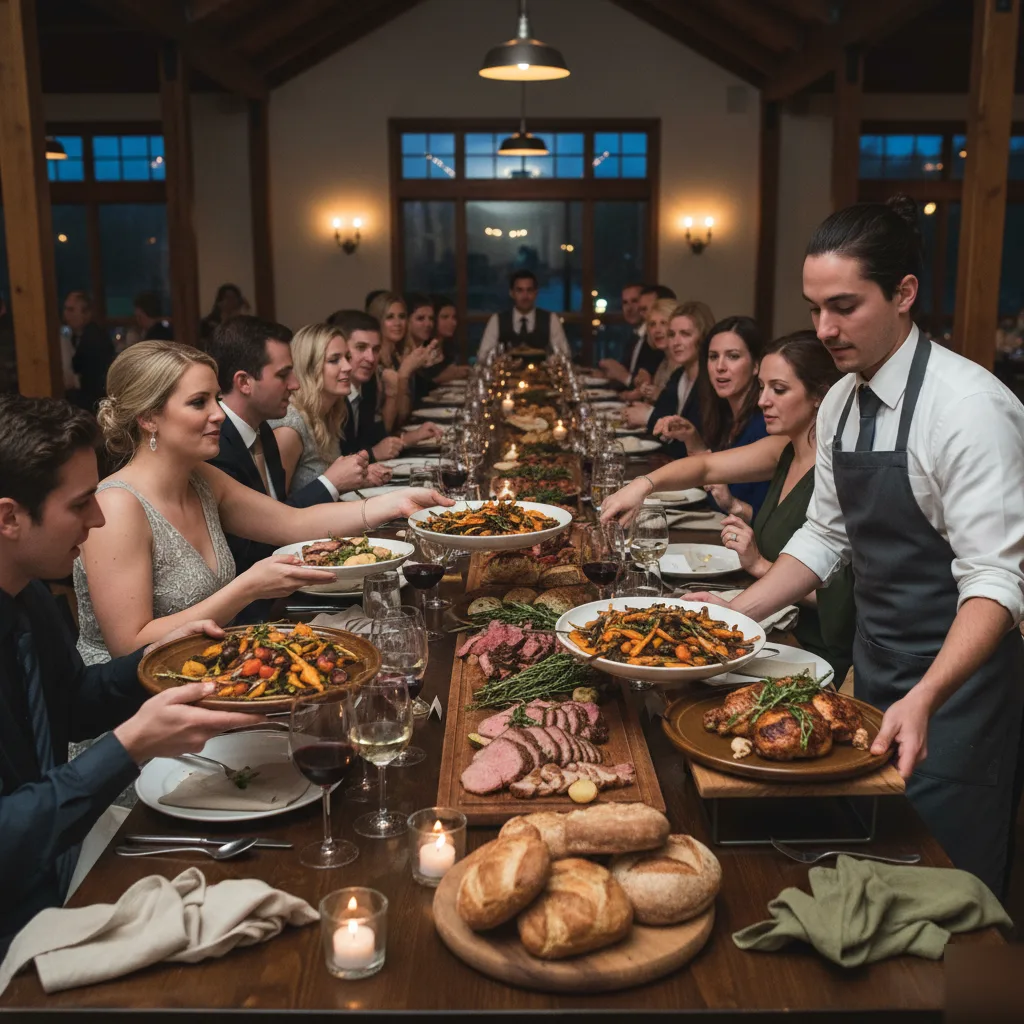

Family-Style Dinner Service Explained Step by Step
Most people picture family-style dinner service and think of Thanksgiving. Big platters in the middle of the table. Everyone reaching, passing, sharing. That's the core idea, but at a wedding or event, there's a real process behind making it feel that easy.
We've run hundreds of events in Grand Junction, and the behind-the-scenes work is what separates a smooth family-style dinner from a messy one. Here's how it actually breaks down.
The Step-by-Step Flow
- Menu planning and portioning. Every dish gets planned around table size. If your tables seat eight, each platter holds enough for eight plus a little extra. Nobody should feel like they're grabbing the last piece.
- Kitchen timing and staging. All the platters for one course get plated at the same time. This is the hardest part. A steak platter hitting table six while table two is still waiting? That kills the whole feel of the meal.
- The first drop. Servers bring out platters and place them at the center of each table. They'll usually say what's on each dish. Guests don't have to guess what they're looking at.
- Passing and serving. Guests pass dishes around the table, serve themselves, and start eating together. This is the moment that makes family-style dinner service work. Everyone starts at the same time.
- Replenishing. Servers watch the tables. When a platter runs low, they bring a fresh one. Good service means guests never stare at an empty dish wondering if more is coming.
- Clearing. Once a course wraps up, servers clear all the platters before the next course arrives. Clean table, fresh start.
Six steps. But each one needs real coordination between the kitchen and the floor staff.
What Makes It Different at Events
At home, you set out the food and sit down. At a wedding reception near the Redlands or a corporate event on the I-70 Business corridor, the scale changes everything. You might have 15 tables that all need hot food at the same moment, and the kitchen has to fire dozens of platters in sync while servers move fast without rushing anyone.
Here's something most people don't catch until it's too late. Family-style dinner service in Grand Junction actually requires more serving staff than a buffet. Each table needs attention. Platters need swapping. Drinks still need pouring. It looks relaxed from the guest side, that's by design.
We see couples assume family-style means less work for the catering crew. It's the opposite. The work just happens closer to the guest, so it has to be seamless.
A Quick Real-World Example
Picture a fall wedding at an outdoor event space in Grand Junction, late October, when the canyon country air finally cools down and the Book Cliffs are turning that dusty gold. Eighty guests across ten tables. The couple chose three shared plates per table: a carved meat platter, roasted vegetables, and a grain salad. Servers dropped all thirty platters within a four-minute window. Guests started passing food right away. The whole room was eating together within ten minutes of the first plate landing.

That's the magic of it.
But it only works because the timing was rehearsed. The kitchen had a platter map. Every server knew exactly which tables were theirs. One small detail off and you get cold food or confused guests.
So if you're weighing family-style dinner service for your next event, the process matters as much as the menu. Knowing these steps helps you ask the right questions and plan with confidence. If you're ready to start building your event menu, check out our private event space options to see how we can bring this together for you.
Family-Style vs. Buffet vs. Plated: The Real Differences
People mix these up all the time. We hear it at nearly every tasting event we host. So let's clear it up fast.
With a buffet, guests stand in line. They walk to a food station. They serve themselves from chafing dishes. It works, but it creates traffic jams and long waits.
Plated service is the opposite end. A kitchen crew portions every plate. Servers bring each guest a pre-set meal. It's formal. It's precise. But it can feel stiff for a celebration that's supposed to be fun and loose.
Where Family-Style Dinner Service Fits
Family-style dinner service lands right in the middle. Large platters and bowls come to each table. Guests pass the dishes around and serve themselves while seated. Nobody stands in line, nobody gets a plate they didn't choose.
Think of a big holiday meal at your grandma's house. That's the vibe. Shared food creates shared conversation, it pulls strangers into the same moment around a table.
Here's what actually sets these three apart in practice:
- Guest movement: Buffets require guests to leave their seats. Family-style and plated keep everyone at the table.
- Portion control: Plated meals give each guest the same amount. Family-style lets people take what they want. Buffets are a free-for-all.
- Pace of the meal: Plated service runs on the kitchen's schedule. Family-style lets each table eat at its own speed.
- Table interaction: Passing platters gets people talking. Buffets scatter guests across the room. Plated service keeps things quiet.
And here's something most people don't think about until event day. Buffets need a lot of floor space for stations, sneeze guards, and traffic flow. Grand Junction venues, outdoor spaces along the Colorado River or spots out in the Redlands, can feel cramped with a buffet line cutting through the middle. Family-style dinner service keeps the food on the tables, so your venue layout stays open.
The Social Factor
We've watched this play out hundreds of times. A table of eight strangers at a wedding reception will sit in awkward silence until the food arrives. But when someone has to ask "Could you pass the roasted vegetables?" the ice breaks right there.
That moment matters.
According to family-style meal service research, people who share food from common dishes report stronger feelings of connection with their dining companions. It's not just a nice idea. It's backed by research.
Buffets don't create that. Plated service doesn't either. Only family-style dinner service puts a shared task at the center of every table.
Practical Trade-Offs to Know
Family-style isn't right for every situation. If your guest count tops 200, the kitchen needs to produce a big volume of platters fast. Tables of 10 or more can struggle to pass heavy dishes across a wide table. But for weddings and corporate events in the 50 to 150 range, it's often the sweet spot.
One scenario we run into often: a couple books a private event space for 80 guests. They want the meal to feel warm but still look polished. Plated feels too rigid. A buffet feels too casual. Family-style dinner service gives them both ease and a put-together look in one approach.
So which style fits your event? If you're still weighing options, our dinner service page walks through exactly how we handle each format so you can decide with confidence.
How Much Food to Plan for Family-Style Service
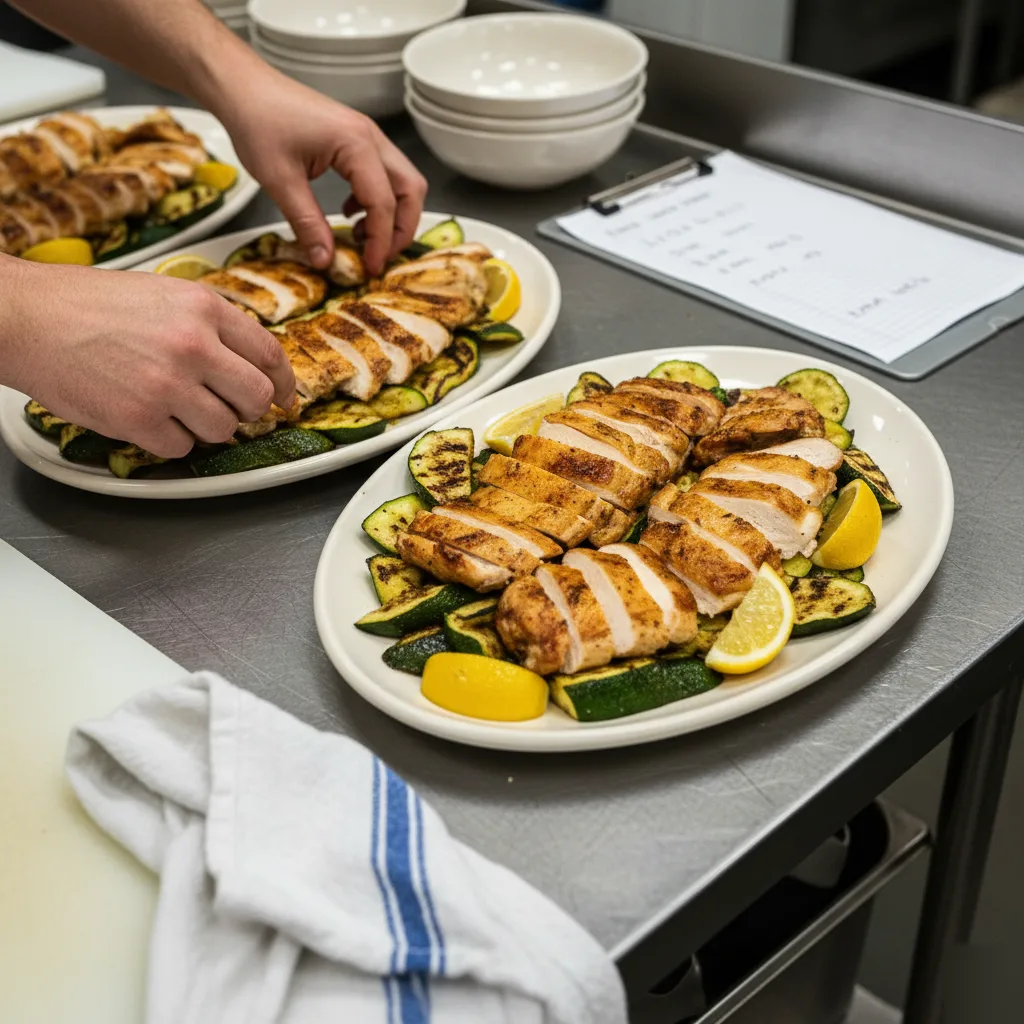
This is where most people get tripped up. And it's the question we hear more than any other. How much food do you actually need on those platters?
The short answer: more than you'd cook at home, less than you'd guess for a buffet.
The Basic Rule of Thumb
Plan for about 1 to 1.25 pounds of total food per guest. That covers proteins, sides, bread, and salads combined. But family-style dinner service works differently than plated meals. People take what they want. Some go back for seconds. Others barely touch certain dishes. So you need a cushion built in.
Here's how we typically break it down per person:
- Start with 6 to 8 ounces of protein per guest. This is your main dish anchor.
- Add 4 to 5 ounces per side dish. Most events run two or three sides.
- Include about 2 ounces of bread or rolls per person.
- Factor in 2 to 3 ounces for salads or starters already on the table.
- Build in a 10 to 15 percent overage on everything. Platters should never look empty.
That last point matters a lot. A half-empty platter signals "we're running out," and guests stop reaching for it even when food remains. According to the National Restaurant Association, visual abundance directly affects guest satisfaction at shared-table events. Full platters keep the energy up.
Table Size Changes Everything
A table of six eats differently than a table of ten. Smaller tables tend to consume more per person because there's less hesitation. Bigger tables often leave more behind. We see this pattern constantly at events around Grand Junction, from tight rehearsal dinners downtown to larger receptions out near the Colorado National Monument, where the drive alone works up an appetite.
For tables of six to eight, bump your per-person estimate up by about 10 percent. For tables of ten or more, you can usually stay right at the baseline numbers.
Don't Forget the Timing Factor
Evening events call for heartier portions. A Saturday night wedding reception needs more protein than a Sunday brunch. If your event includes a cocktail hour with appetizers beforehand, you can scale back main course quantities by about 15 percent. Guests arrive at the table already partially satisfied.
But skip the appetizer hour? You'll want fuller platters from the start.
One scenario we run into regularly: a couple plans a late afternoon ceremony at a Grand Junction venue, the timeline pushes dinner to 7:30 PM, and suddenly guests are hungrier than anyone expected. Build your food plan around when people actually sit down, not when the invitation says dinner starts.
- Afternoon events (before 5 PM): lighter portions work fine
- Evening events (after 6 PM): plan for full portions plus extras
- Events with cocktail hour: reduce main course by 10 to 15 percent
- Events without appetizers: increase platter quantities across the board
One more thing people overlook. Kids' tables. Children eat roughly half of what adults do, so count them separately in your math. A table of eight kids doesn't need the same platter volume as a table of eight adults.
Getting the food quantities right is half the battle with family-style dinner service. Nail this part, and the rest flows. If you're starting to plan your event menu and want help dialing in the right amounts, our dinner service crew can walk you through it based on your guest count and timeline.
Frequently Asked Questions
How many servers do you actually need for family-style dinner service?
Family-style dinner service needs more servers than most people expect. A good rule of thumb is one server for every two to three tables. Each table needs someone watching for low platters, clearing between courses, and keeping drinks filled. A buffet can run with fewer staff because guests do the walking. With family-style, the work comes to the guests — and that takes real hands on the floor to pull off smoothly.
What's a common mistake people make when planning family-style dinner service?
The biggest mistake is assuming family-style dinner service is simpler than plated or buffet service. It looks relaxed from the guest side, but it takes more coordination behind the scenes. Couples often underestimate how many platters need to hit tables at the same time. If one table gets food five minutes before another, the whole shared-meal feeling falls apart. Planning the kitchen timing and staffing early is what keeps everything running the way guests expect.
How is family-style dinner service different from a buffet at a Grand Junction event venue?
The main difference is where guests eat and how they get their food. A buffet sends guests to a food station — that means lines, traffic, and floor space used up by chafing dishes. Family-style dinner service keeps everyone seated while platters come to each table. At Grand Junction venues where space is limited, like outdoor spots near the Colorado River or smaller event rooms, family-style keeps the layout open and the energy at the tables. You can learn more about how we set this up on our private event space page.
Does family-style dinner service work for outdoor venues in Grand Junction?
Yes, family-style dinner service works really well at outdoor Grand Junction venues — but wind and heat are things to plan around. Late spring and early fall events near the Redlands or along the Colorado River can get breezy, which means covered platters and faster service timing matter more. Hot summer days affect food temperature quickly. A good catering team will adjust platter timing and use covered serving pieces to keep food safe and fresh outside.
How does table size affect how family-style dinner service is planned?
Table size drives everything about how platters are portioned. A table of eight needs a different platter size than a table of twelve. Good planning means each platter holds enough for every guest at that table plus a little extra. Nobody should feel like they're racing for the last piece. When you're planning your event, share your table layout with your catering team early so portions and platter counts can be built around your actual setup.
How do you keep food hot when serving large groups family-style?
Keeping food hot during family-style dinner service comes down to kitchen timing and fast drops. All platters for one course get plated at the same time and moved to tables quickly — usually within a few minutes. Covered serving pieces help hold heat between the kitchen and the table. For large events in Grand Junction, especially outdoor ones in cooler fall weather, a platter map and rehearsed timing are what keep food arriving warm instead of lukewarm.